Category Archives: Online Dating

I Am an Exaholic: Part 3

Part one of this three-part blog post detailed why we fall in love, part two examined what happens in the aftermath of love lost, and the phases we all experience during a breakup. This final installment will detail the path to recovery, specifically: the stages of healing, how to cope while you’re recovering, and healing through the twelve steps of Exaholics.

The Stages of Healing

For most Exaholics, the hardest part of the healing process is just getting to the first step: admitting that your attachment to your Ex is unhealthy and needs to end.

It can take a very long time to come to grips with the reality that a relationship is over. Remember, this is how your brain works, and how you were built to bond, even if you know it’s over, you still don’t feel like it’s over. Your limbic brain is a wild creature and not subordinate to the will of your neocortex; it maintains your attachment to your Ex even when you don’t want it to. But even worse, because its hunger for reunion is so strong, it can trick your neocortex into believing that you should get back together with your Ex.

Precontemplation 

This is the stage where you are not yet aware you have a problem; in other words, you are in denial that the relationship is over. If you can’t literally reconnect with them, you might try and stay connected to them with your thoughts, fantasies, rehashing, and following their every move on Instagram. You are still having a relationship with your internalized lover in your head. When you are thinking or fantasizing about your Ex lover, you are still feeling all the same feelings: love, excitement, despair, longing, hurt, anger, and rejection. Staying in contact with them through social media or texting is basically keeping an IV drip of dopamine in your arm. This stage will feel like purgatory- a mid-range ring of hell where you are not together, but not apart emotionally. You are still emotionally connected to your Ex, whether or not you are actually speaking. You can’t bear to delete their number or block them. Being in this space is very, very painful. You are deeply attached to someone you are not able to connect with. Or, if you connect with them, you get hurt. This stage is particularly difficult if your relationship ended with little to no closure. The good news is, after weeks or months or even years of this torture a small remnant of your healthy core will pipe up to say, “What the hell are you doing?”

 Contemplation

This stage is defined by ambivalence. You are aware that you are not being treated well and that your life is suffering as a result of your attachment to your Ex, but you still feel an enormously strong connection to them. You might be very angry and hurt, but you still love them. It’s a confusing, “I love you but I hate you” dance that pushes and pulls you one way and the other. You hate the way you feel, you hate what this is doing to your life, you hate how much power your Ex continues have over your life, and you might even hate them, but you still care about them. You want them to want you. Your self-worth is still caught up in their opinion of you, so it feels like the only way to get your self-esteem back is for them to desire you again. Many Exaholics feel the need to test the relationship before they can finally come to terms with the finality of the situation. So, they try to contact their Ex and talk “one last time” (hello breakup-sex). For Exaholics, bottoming out on your addiction to your Ex is usually subtle and ambiguous and builds over time. At this point, your neocortex begins to gain a toehold. Your rational self starts actively wrestling with your limbic brain for control of your mind and soul. Your thinking mind becomes increasingly clear about the fact that this relationship should be over and that the person you are stuck on is simply not able or willing to love you in return. You begin to understand that your emotional dependence on this person is ruining you. That maybe, just maybe, you want the relationship to be over too.

Determination

In the Determination phase of change, Exaholics feel motivated to change, and begin to plan how they will finally break free. Perhaps you will seek help from a therapist. solicit advice or look for resources (hi!). One of the most important and helpful things that an Exaholic can do at this point is connect with other people who are going through the same experience. When an Exaholic comes into contact with other people who feel the same things that they do, or even better- have begun to work the steps and heal- a major shift can happen: they can start to feel hope that they can change to. Your stages of change have already led you to this moment. The fact that you are reading this blog post is evidence that you are either in the contemplation or determination phase of recovery.

Taking Action and Coping

The path to reducing obsessions and starting to get control of your mind lies in mindfulness and learning how to be here now.

Stay in the present. Thoughts of your Ex are time travelers. They are memories of things that happened in the past or worries about things that could happen in the future. In the actual, literal, present moment, very little is actually happening. You’re breathing. That’s it. When an intrusive or triggering thought about your Ex pops into your head, simply being able to notice, “I am having a thought about something that is not happening right now,” and coming back into physical reality will help you step back and develop your metacognition (metacognition is your ability to think about what you’re thinking about). This strengthens your neocortex and helps build the ability to intentionally shift away from obsessive thoughts. Use the present moment as an anchor and steer yourself back into the present over and over and over again. Over time, your mind is freed from obsessive rumination.

Be tolerant of yourself. Just like if you broke your arm, healing is going to hurt. You have to respect your pain and allow it to guide you to do the work you need to do. You have been injured, and its okay to not be okay for a while. 

Avoid social media. At no other point in history has it been easier to torture yourself by spying on your Ex. Of course, you are craving knowledge of your Ex and social media might seem like a lifeline of connection to your lost relationship. Unfortunately, each “contact” with your Ex reinforces the biological connection and every morsel of information zings you with dopamine, creating an explosion of anxiety, torment, and longing inside of you. Having new information to obsess about is simply prolonging your madness. I cannot tell you what to do, but I am going to tell you what to do: block your Ex on social media.

When your Ex is sleeping with someone new… this is a toughie. Even if you are doing okay, there is still something about knowing that your Ex is with someone new that will send you into a frenzy of emotional pain, craving and desire. In your mind’s eye you play out scenes of your life with your Ex, except your role is being played by someone who might be sexier, more fun, or more interesting. You see your Ex- the happy, sweet, fun one you first fell in love with- sharing the best parts of themselves with someone else. This all feels incredibly unfair. Being victimized by these intrusive images is incredibly traumatizing. Ruminating does not bring any value to your healing process, it only keeps you from moving forward. In order to rescue yourself from the impotent madness of this obsession, you must differentiate between what you are thinking about and what is actually happening. Shift your awareness and distract yourself by practicing mindfulness, using a mantra or making plans. You have to get unstuck from the obsession phase in order for healthy new growth to occur. 

Healing Through the Twelve Steps of Exaholics

If you are ready to admit that your continued attachment to your Ex is a problem, you have arrived at the doorstep of healing.

Step One: Radical Honesty

Accept the truth: the relationship is over, it needs to be over, and it’s time to move on.

Step Two: Grieving and Reaching out for Support

In some ways, a literal death can be easier to accept and deal with than the loss of a cherished primary relationship with your partner. When you want desperately to be with someone who does not want to be with you, losing them feels like a statement of your worth. It’s personal. Once Exaholics have given up the fantasy of reunion and accepted that their lover is not returning, does not love them back, or is simply not the person they hoped they were, grief, fear, and despair close in. During this time it can be tremendously comforting and healing to connect with other people who have genuine empathy and respect for your experience. A simple Google search for “breakup support groups” or “divorce support groups” will turn up options in your area. There are also various online communities available to you, including forums through http://www.exaholics.com (and the Instagram @onceuponatimeonhinge). Find your people, and let them be there for you now.

Step Three: Renewing Faith in Other people

This third step feels good. It feels good to reconnect with people, and it feels good to be validated and understood. You know you can’t connect with your Ex, but you still need connection. Your need for secure attachment is basic and primary, and it doesn’t go away just because you don’t have anyone to attach to. When you connect with a community, you begin to attach to them. Your attachment-craving reunion with your Ex is soothed, somewhat, by nurturing human contact with others. Your attachment is transferred from a dangerous place to a safe one.

Step Four: Reclaim Your Worth and Value

It might be hard to believe that you weren’t rejected by a really great person because you weren’t good enough. Or that the love you had wasn’t the most passionate and intense thing you’ll ever know, and you’re doomed to a life of isolation or settling. None of this is true, and it is important to revise your story about what happened. You shift from being the victim, or the unlovable ogre, into just another person whose relationship didn’t work out. As you develop a new story about what happened, you begin to experience an emotional shift. You begin to reclaim your self-esteem. You realize that your story is not that special or unique. Pain is pain. Loss is loss. Rejection is rejection. Just because you are going through it doesn’t mean that you are a broken person.

Step Five: Growth

Most Exaholics, around this stage, notice a marked shift in the way they feel. Some call it the “pivot point”. They begin thinking less about their Ex and more about themselves. I think a great way to work through this step is to either engage with a group who is willing to ask you hard questions, or to do some journaling and reflecting. Questions to include asking yourself during this step are:

“What were my circumstances before I got involved in this relationship?”

“What attracted me to this person?”

“Were there early red flags I chose to ignore?”

“Did I confuse passion for a healthy, secure attachment?”

“How did I handle my anxiety in this relationship?”

“Am I dependent on the good opinions of others for my own self worth?”

“Were there mistakes I made that impacted the quality of this relationship?”

The true opportunity of loss and pain is growth. The goal of step five is to begin to understand the vulnerabilities that allowed you to become so deeply addicted to an unhealthy relationship and learn from that experience.

Step Six: Ask for Feedback

Step six involves asking trusted and emotionally safe people for their feedback. Think about the people who are most familiar with both you and your Ex. Consider asking them their opinions of what they witnessed as you went through the relationship, and be open to their answers. Taking feedback non-defensively is difficult. Try to resist the impulse to meet their feedback with a “Yes, but.” Rather, breathe and listen to what they are saying about how it looked from an outsider’s perspective.

Step Seven: Build a Different Future

The sweetest revenge there is is for you is to genuinely be happy and well, and to love your life. In step seven, you figure out what makes you happy and how to get better results in your life. It’s time to start asking yourself some exciting new questions:

“Knowing what you know now, what kind of person would you like to be in the future?”

“Who do you want to be in your next relationship?”

“How will you know if your next relationship is working? How will you know if it isn’t?”

Step Eight: Action

Practice your new skills on your friends, your family and with your community of support. Accept new ways of being to feel weird and unnatural at worst. Remember- act from your values, not your feelings.

Step Nine/ Ten: Make Amends 

You might feel really badly about things that you did to other people while you were out of your mind with toxic love. Remember that pain makes everyone self-focused. When you were in the depths of your Exaholism, you might not have been at your best as a friend, mom, dad, daughter, son, sister, brother, or co-worker. Make a list of people who have been harmed by your “addiction” and write your wrongs. When you are done, go back and write your own name at the top.

Step Eleven: Maintenance 

When you are in step eleven, all of the things you’ve learned come together. You are active out in the world, being a new you. You are maintaining the positive changes you’ve worked so hard to develop.

Step Twelve: Help Others Heal and Grow Too

Your ability to have empathy for the reality of the pain and trauma that others are currently enduring means more than you know. Your presence in the life of someone else can represent hope that they too may someday overcome their own pain. So seek out opportunities to connect with people who are hurting. Feel free to DM me (@onceuponatimeonhinge) if you feel you are struggling, and also if you feel you are in the emotional place to help someone else and I would be more than happy to make connections that way.

You are normal, and you are not alone.

DM me on Instagram @onceuponatimeonhinge with feedback, questions, or to discuss this post further!

 

I Am an Exaholic: Part 2

Today’s post is going to start off where part one ended: what happens when love is lost.

Broken Attachment

Even before a breakup happens, most people can sense their relationship is failing long before it is officially over. The limbic brain senses that you are in one of the most terrible dangers a human can experience: disconnection. Anxiety flares. The neocortex tries to find evidence to make sense of your inarticulate emotional experiences, getting stuck on rational details like what exactly was said or done that indicates the attachment is being threatened.

When a romantic attachment starts to feel less secure, most relationships begin to polarize into a pursue/withdraw pattern. In other words, one partner chases and the other pulls away. The pursuer experiences the other as unavailable or unresponsive and attempts to seek contact and reconnect with increasing intensity. The withdrawer experiences the pursuer as emotionally unsafe and withdraws both physically and emotionally (which only heightens the pursuer’s anxiety). This cycle usually intensifies over time. Each spin around the cycle stretches the attachment ever further, until eventually, it breaks.

The Aftermath of a Breakup

Almost everyone in the aftermath of a lost cherished relationship describes the same experience: feeling devastated about the loss, being obsessed with thoughts of their Ex, feeling an overwhelming desire to reconnect, doing compulsive things in efforts to maintain proximity with their Ex, and feeling absolutely helpless to stop those feelings- even when they really want to and know they should. It’s even more terrible and confusing when their relationship seemed satisfying and meaningful.

All humans are terribly impacted by the horrible feelings that rejection creates. Many people describe the moment they realized their relationship was ending as having an unreal quality to it- like a nightmare. In these first moments when you are confronted with rejection or abandonment, everything in your body goes into survival mode. For humans, like most mammals, abandonment is a primary trauma. When you lose your partner, your body, mind, and emotions experience it as a direct threat to your survival and fundamental well-being. When loss is happening neurotransmitters like dopamine and norepinephrine soar, creating intense agitation and emotionality. When enduring the trauma of abandonment, you may be flooded with anxiety that can border on panic or terror.

The 9 Phases of Post-Breakup Trauma 

Protest and Despair

Even if you are the one initiating the breakup, in the moment that you separate from the person to whom you have been so strongly attached you are still likely to have an intense emotional reaction. The emotions associated with a threatened primary attachment feel less like sadness and more like a threat to your very existence. This primal experience can be very confusing for people, and the fear and anxiety they feel at the moment of separation can make them think that maybe they should stay in the relationship after all (even if the relationship is very unhealthy for them). The drive to reestablish contact is so strong that it can feel absolutely overwhelming and impossible to resist. This is why people call and text even when they know they shouldn’t, stalk Facebook and Instagram pages, and arrange for unexpected encounters, even when the object of their affection no longer wants anything to do with them.,

Like protest, despair has very distinct characteristics and is a coherent physiological and psychological state. Despair begins as frantic efforts to reconnect collapse, single-minded hope is replaced with hopelessness and a new certainty that the beloved is not coming back.

Withdrawal

As I discussed in part one, romantic love is experienced through the same reward and motivation systems that illicit drugs hijack when you get high and falling in love is similar to having a fierce substance addiction. Therefore, when love is taken away, everything inside of you blazes into a fury of craving and need. The experience of jilted lovers is highly consistent with symptoms of withdrawal to addictive substances.

Obsession

Obsession fuels love. Early stage love is characterized by obsessions that percolate excited feelings and daydreams about your lover. Similarly, a bad breakup is defined by dark obsessions that spin out into nightmarish anxieties. One important thing to understand about obsessions after a breakup is that because losing an attachment triggers the biological, physiological experience of love, your thoughts about your Ex are much more likely to be focused on their positive qualities. This means you will once again begin to idealize your lover, downplay their flaws, and focus on the wonderful parts of your relationship.

Information Gathering

If you can’t communicate with your lover or have actual contact with them, gathering information about them is another way to keep your beloved close to you. You may watch their social media pages to gain insight into their state of mind, make sense of what happened, look for evidence of where they’ve been, who they’re with, and how they’re feeling. You try to interpret small clues and nuances from things they post about how they feel. Are they sad? Do they care? Do they still love you? You may personalize their online activity, interpreting posts and pictures as efforts to communicate with you.

Love and Hate

Interestingly, even when people are very angry with their rejecting partner, their brain scans still give evidence of much of the same activity as romantically attracted people. This implies that as intense as your hatred toward your Ex might be, it doesn’t necessarily extinguish feelings of love. The truth is, love and hate are close neighbors, neurologically speaking, occupying nearly the same small patch of real estate in your brain. They fuel each other and tend to go hand in hand- which may be why your partner can incite rage and irrationality in you in the way that no one else can. The true opposite of love isn’t hate at all, but indifference; heartbroken lovers are anything but indifferent.

Physical Symptoms

Studies have found that people in long-term relationships tend to impact each other physiologically. Stable relationships create a sense of security and co-regulation that has physical implications. When that security is disrupted, it takes a physical toll. Abrupt disconnection from a long-term lover creates changes in sleeping and eating patterns, affects your immune system, and triggers a stress response.

Loss of Self-Esteem

Breakups are so fundamentally traumatizing and damaging to your self-esteem because of the rejection at the core of the experience. If you are heartbroken, it means that you really loved your Ex. You believed they loved you. You gave yourself to them and trusted them to love you back. When they couldn’t, or wouldn’t, it feels like a statement about your worth. If you had been better, sexier, more fun, more accomplished, less difficult, or more lovable, you would have been enough for them. They would have loved you better. Instead, they hurt you, mistreated you, or simply rejected you. When the one person you totally opened up to changes their mind about you, it changes the way you feel about yourself. Self-confidence can feel shattered; when you lose value in the eyes of your Ex, you lose value in your own eyes as well.

Social and Other Losses

In the midst of your inner torment, the outside reality of your life may be in shambles as well. You lose so much when a relationship ends. Your other friendships may be strained, attempts to spend time with friends you knew as a couple may be awkward. You are decimated by pain and may be in the grips of a feverish compulsion to know everything about your Ex, making interactions uncomfortable for everyone. The loyalties of your friends may be divided. Losing your relationship may make you feel like you have lost your entire life.

Relapse 

Months, even years after a breakup, a chance run-in with an Ex can trigger all the old desires and longings. Often, Exaholics in recovery are also triggered by seeing certain people, being in particular places, or hearing songs that remind them of their Ex. Such exposures can bring about a new round of craving and obsessive thinking, and even trigger a new flurry of texting, calling, and lurking around in efforts to reconnect with their lost love.

is-the-notebook-on-netflix

If you are reading this wondering, “Is this ever going to get better?”- the answer is yes. The next blog post will be focused on the path to recovery: the stages of healing, how to cope while you’re recovering, and healing through the twelve steps of Exaholics.

DM me on Instagram @onceuponatimeonhinge with questions, comments, or just to discuss this post further!
The Art of Seduction: Part 1

The Art of Seduction by Robert Greene is the single most fascinating book I’ve ever read, specifically as it pertains to dating and relationships. As unromantic as it might seem, the seductive process is a calculated and unavoidable aspect of any courtship; these strategies of persuasion and charm are even more pronounced in online dating where every move is premeditated.

Every seduction has two elements: first, yourself and what is seductive about you; and second, your “target” and the actions that will penetrate their defenses and create surrender. In other words, every person seeking a romantic relationship can fall into one of eight seductive character profiles (or the “anti-seducer” profile), and engages in the four phase, twenty-four step seduction process.

Part one of this two-part series will describe the types of seductive characters, and the types of individuals most likely to fall victim to seduction. In many ways, the eight seductive character types are masks we all wear when trying to seduce someone, rather than reflections of who we really are. Read through the descriptions and determine which category, or categories, you fall into. Also, see if you can identify which type of seducer, or seducers, you are typically attracted to.

image.png

The Eight Seductive Characters

The Siren (Female)

The siren is the ultimate male fantasy figure because she offers a total release from the limitations of his life. In her presence, which is always heightened and sexually charged, the male feels transported to a realm of pure pleasure. In a world where women are often too timid to project such an image, sirens learn to take control of the male libido by embodying his fantasy.

The Rake (Male)

Women rarely feel desired or appreciated enough; they crave a certain level of attention that men are often too distracted and unresponsive to offer. The Rake is a great female fantasy-figure because when he desires a woman (brief though that moment may be) he will go to the ends of the earth for her. Interestingly, the Rake is often disloyal, dishonest, and amoral, but that only adds to his appeal. He stirs a woman’s repressed longings by mixing danger and pleasure.

The Dandy (Male or Female)

Most of us feel trapped within the limited roles the world expects us to play. We are therefore instantly attracted to those who are more fluid than we are- those who create their own persona. Dandies excite us because they cannot be categorized, and hint at freedom we want for ourselves. They play with masculinity and femininity; they fashion their own physical image which is often startling. Dandies use the power of ambiguity to establish an alluring presence that stirs repressed desires.

The Natural (Male or Female)

Childhood is the golden paradise we are always consciously or unconsciously trying to re-create. The Natural embodies the longed-for qualities of childhood- spontaneity, sincerity, unpretentiousness. In the presence of Naturals, we feel at ease, caught up in their playful spirit, transported back to that golden age. They neutralize people’s defensiveness and infect them with helpless delight.

The Coquette (Male or Female)

The ability to delay satisfaction is the ultimate art of seduction- while waiting, the “target” is held in thrall. Coquettes are grand masters of the game, orchestrating a back-and-forth movement between hope and frustration. They bait with the promise of reward- the hope of physical pleasure, happiness, fame by association, power- all of which, however, proves elusive; yet this only makes their targets pursue them more. The alternation of heat and coolness keeps people seduced for the long-term.

The Charmer (Male or Female)

Charm is seduction without sex. Charmers are consummate manipulators, masking their cleverness by creating a mood of pleasure and comfort. Their method is this: they deflect attention from themselves and focus it on their target. They understand their target’s spirit, feel their pain, and adapt to their moods. In the presence of the Charmer one feels better about themselves. Charmers aim at people’s primary weaknesses: vanity and self-esteem.

The Charismatic (Male or Female)

Charisma is a presence that excites us. It comes from an inner quality- self-confidence, sexual energy, sense of purpose, contentment- that most people lack and want. This quality radiates outward, permeating the gestures of Charismatics, making them seem extraordinary and superior. They learn to heighten their charisma with a piercing gaze, fiery oratory, an air of mystery. Charismatics radiate intensity while remaining detached.

The Star (Male or Female)

Daily life is harsh, and most of us constantly seek escape from it in fantasies and dreams. Stars feed on this weakness; standing out from others through a distinctive and appealing style, they make us want to watch them. At the same time, they are vague and ethereal, keeping their distance, and letting us imagine more than is there. Their dreamlike quality works on our unconscious. Stars become the objects of fascination by projecting a glittering but elusive presence.

The Anti-Seducer (Male or Female; The Likely Target)

Seducers draw you in by the focused, individualized attention they pay to you. Anti-seducers are the opposite: insecure, self-absorbed, and unable to grasp the psychology of another person, they literally repel. Anti-Seducers have no self-awareness, and never realize when they are pestering, imposing, talking too much. Root out anti-seductive qualities in yourself and recognize them in others.

The above descriptions are condensed from a 500 page book- so, if you are interested in learning more please DM me @onceuponatimeonhinge as I LOVE to discuss this topic.

Part two of the series will recap the phases and steps of the seductive process. Stay tuned!

How to Hinge Like a Pro

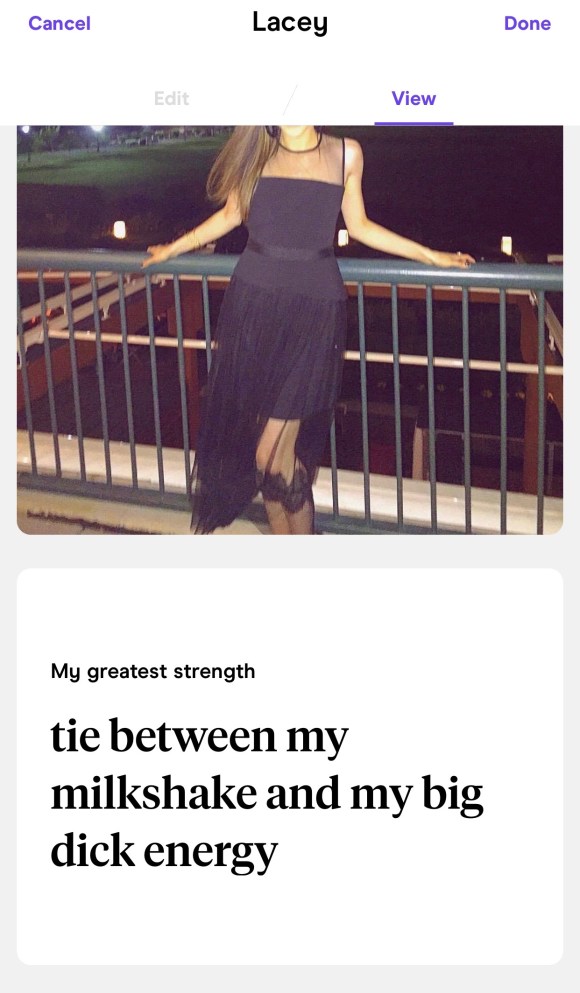
It wasn’t until I started posting Hinge content to my personal Instagram account (see former post for how I got started) that I realized I had a knack for navigating Hinge. This entire blog post might seem like a humble brag, and, well, it is. The number one reason I get so many matches & asked out on so many dates on the app has nothing to do with my appearance- sure, my pictures are well curated and filtered but I’m just your basic brunette Jewish girl. My success on the app boils down to my brutally honest and straightforward approach, and the guys I match with all share in my candid and even satirical angle. Dating on an app is inherently awkward and can feel embarrassingly vulnerable, so approaching the app too seriously only magnifies that fact and makes people uncomfortable. There are also so many options that if you don’t stand out in some way you will fade into the background. I have posted my Hinge profile below. Disclaimer: I am in no way saying my Hinge profile is perfect or the holy grail, it’s just the ideal depiction of my personality, interests and sense of humor:

IMG_5671.JPGIMG_5672.JPGIMG_5679.JPGIMG_5680.JPGIMG_5681.JPGIMG_5682.JPG

Let’s talk prompts first. Answer wise, the biggest mistake I see people make on their profiles is taking ABOUT their personalities instead of SHOWING their personalities. For example, rather than stating you are “fluent in sarcasm”, SHOW me your sarcasm. Another common red flag are answers that are so general or cliche that they could have been suggested answers; how does you liking pizza or “The Office” tell me anything about YOU? Moreover, it’s difficult for others to use your basic as hell prompt answers as conversation starters. I like that my profile speaks for itself, and if people don’t get me or my sense of humor, I wouldn’t want to match with them anyway. When I’m swiping, I personally value the quality of prompt answers over the quality of people’s pictures, and in the poll on my Instagram 71% of you agreed. The reason your profile exists is to pique someone’s interest, so spending time translating unique personality quirks into prompt answers is crucial.

My answers are tongue in cheek and lean towards dark humor because that’s a reflection of who I am, but that wouldn’t work for everyone. When drafting a prompt answer, don’t overthink it: write something that would pique your own interest and make you want to learn more, ask questions, and get to know that person. Most importantly: don’t be afraid to be exposed and let your guard down. People are liking your profile to ultimately date you, or at the very least hook up with you. Why would someone crave intimacy with someone they can’t get to know? Don’t be afraid to be revealing, you will be amazed how far it will get you. If you are struggling to come up with good prompt answers, DM me and I will therapize the shit out of you until we come up with three winners.

IMG_5666.JPGIMG_5658.JPG

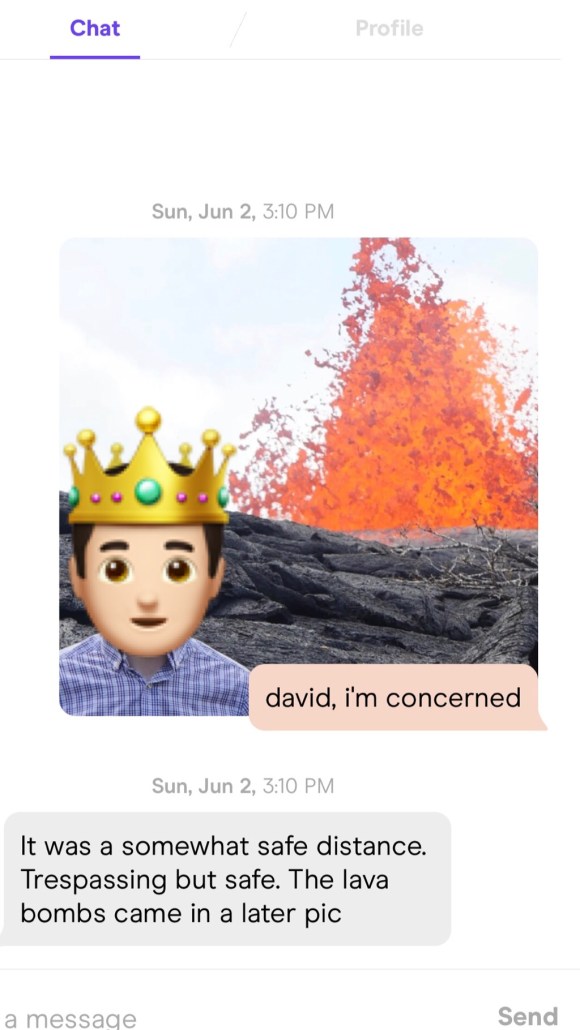
Now let’s talk pictures. My process for choosing my Hinge pictures was very simple: ones where I thought I looked pretty and/or skinny. I also tried to include a variation of pictures of me alone in formal and casual settings, as well as a couple of group pictures to show that I occasionally socially interact in public. I don’t do sexy or goofy pictures because that wouldn’t be authentic for me; my rule of thumb is this:  if a picture doesn’t reflect how you would possibly look on a date, it’s either too scandalous, too filtered/facetuned or too bizarre. However, I do occasionally appreciate when I’m swiping and come across eccentric pictures that can spark a conversation:

A689FF96-B097-4F27-A732-716167998D4F.JPG


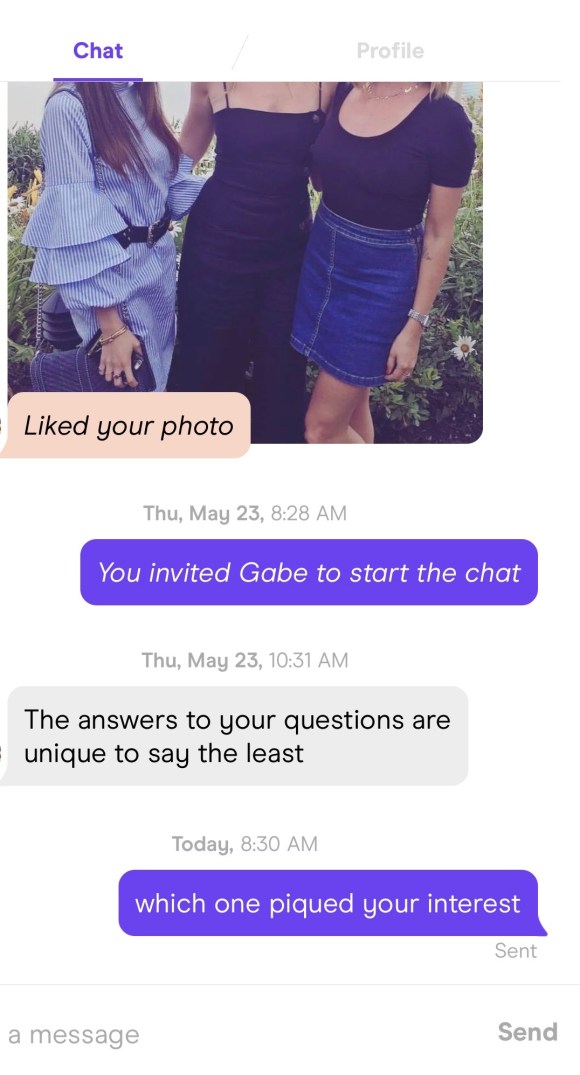
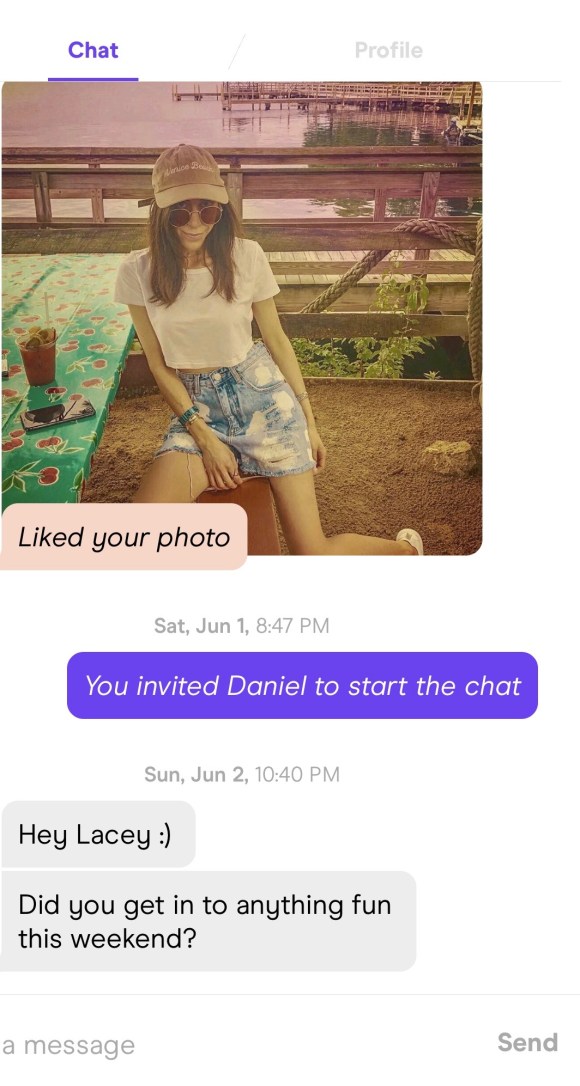
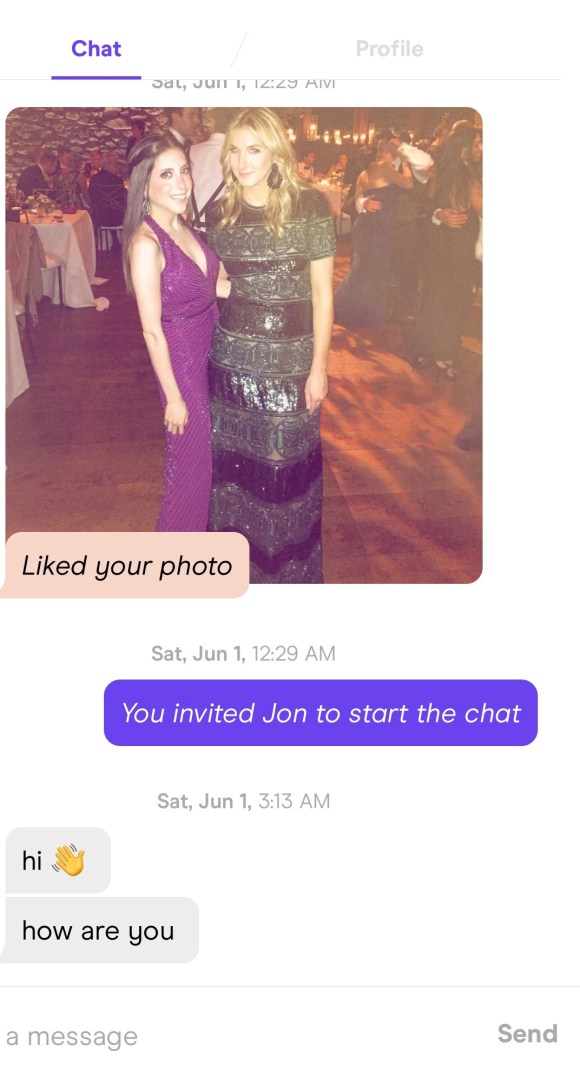
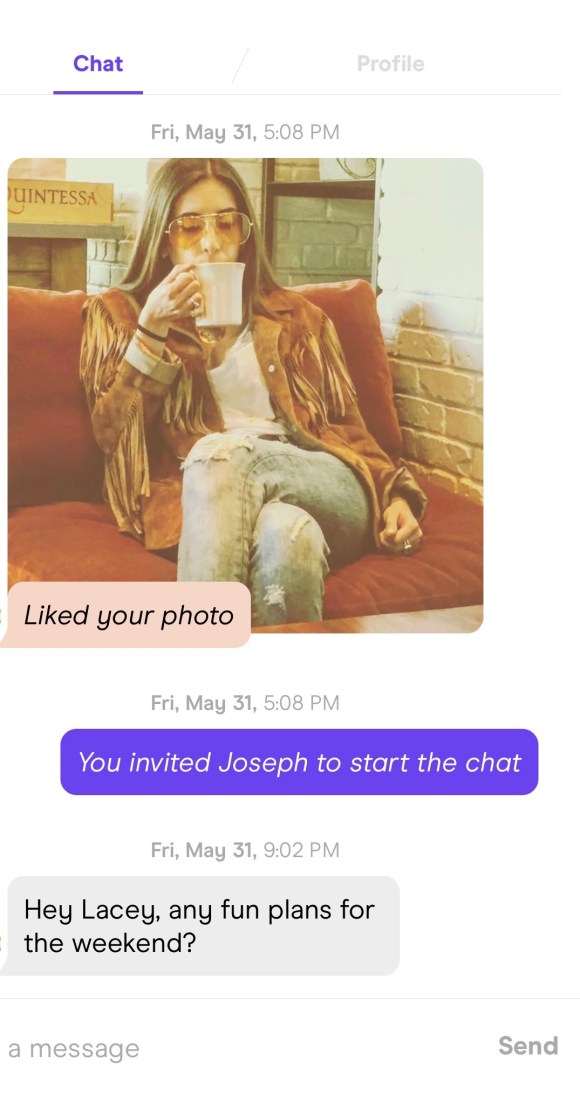
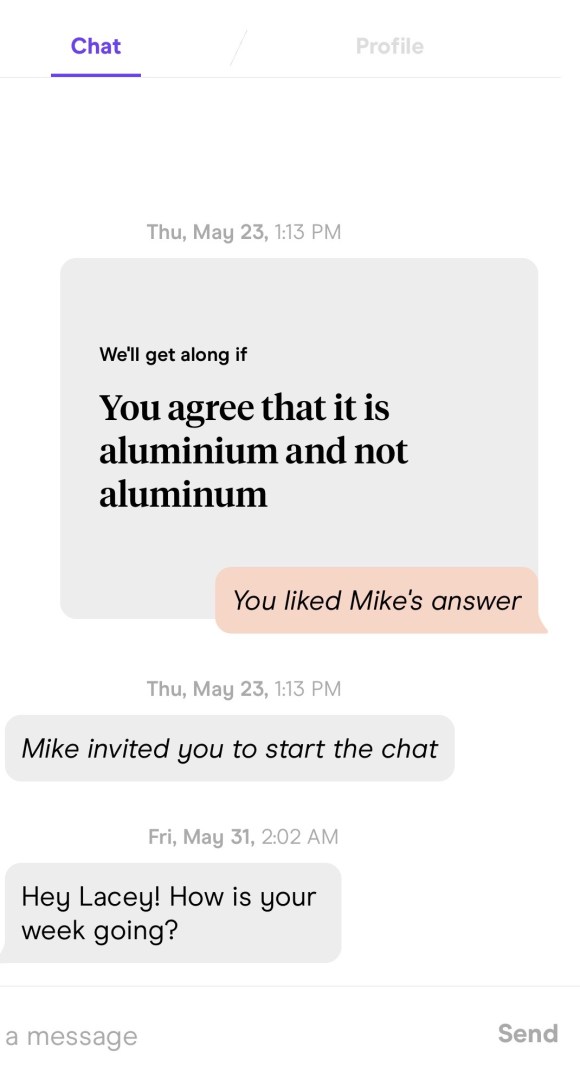
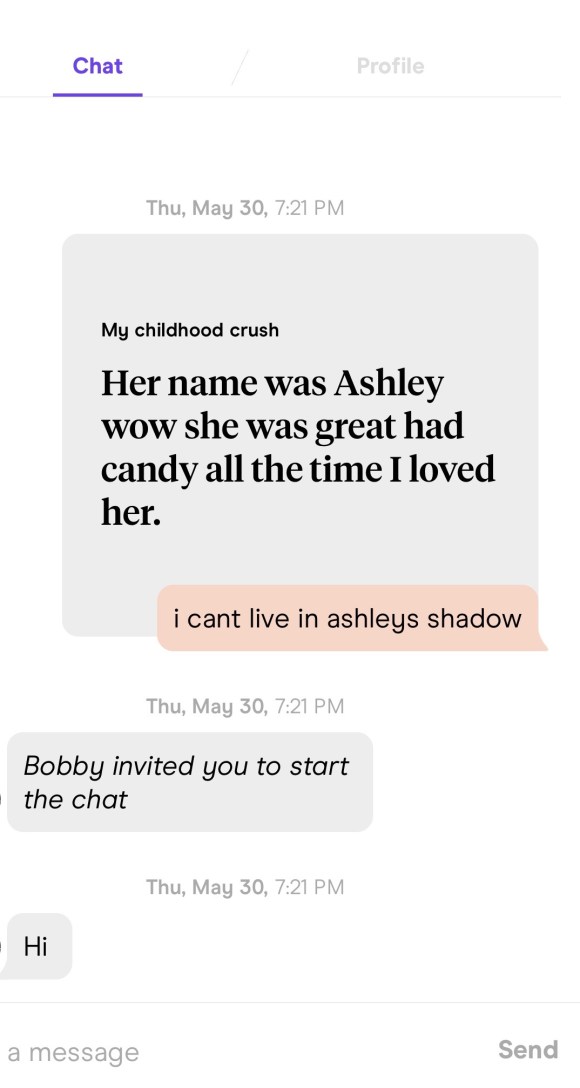
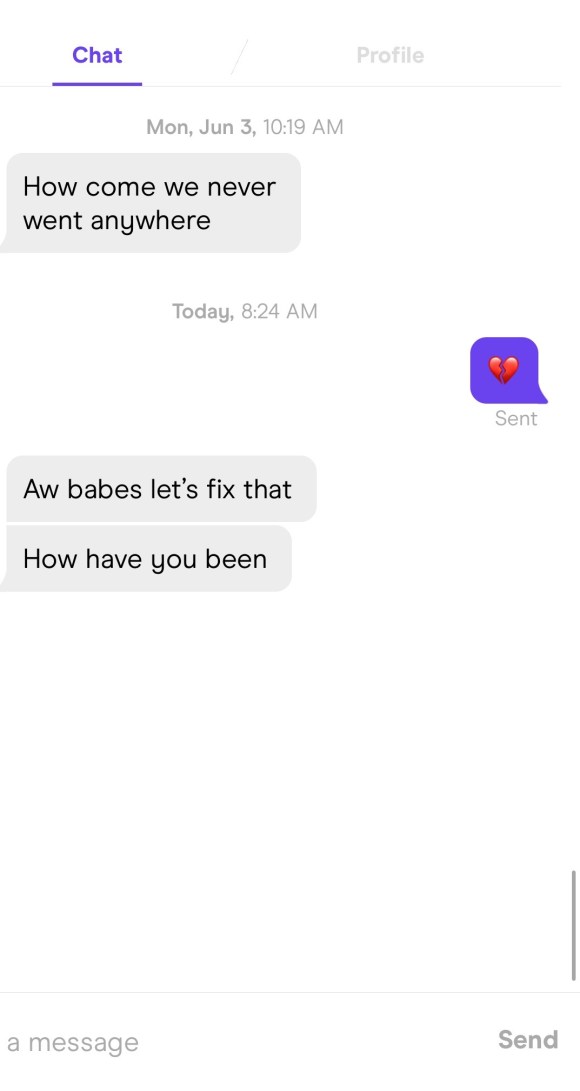
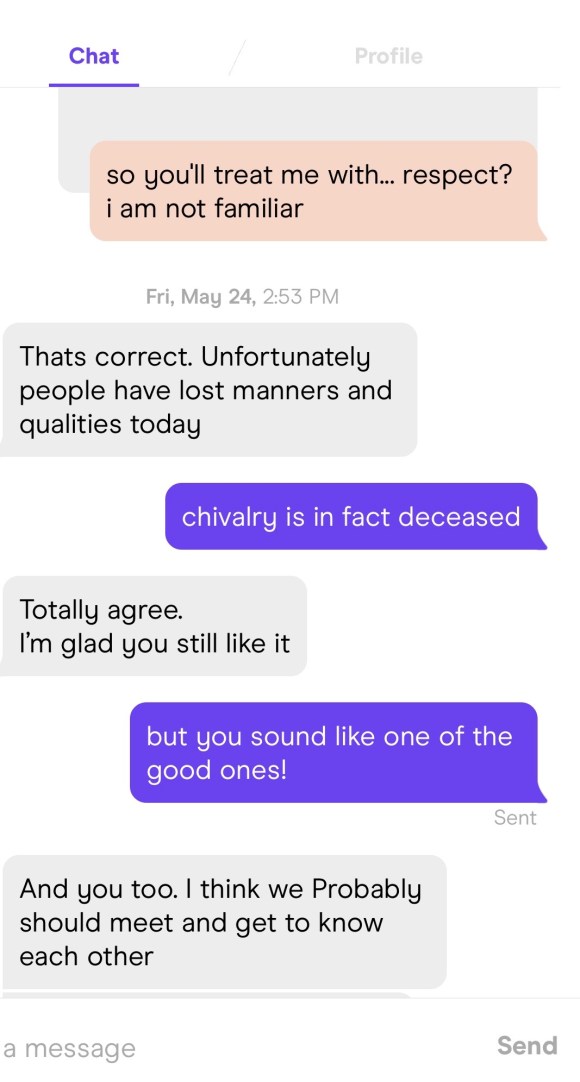
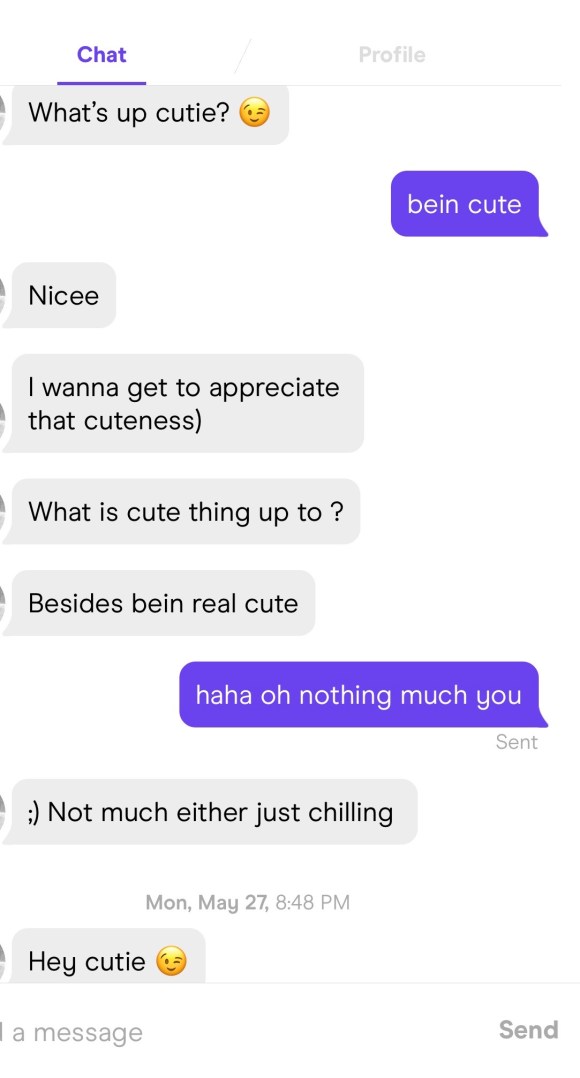
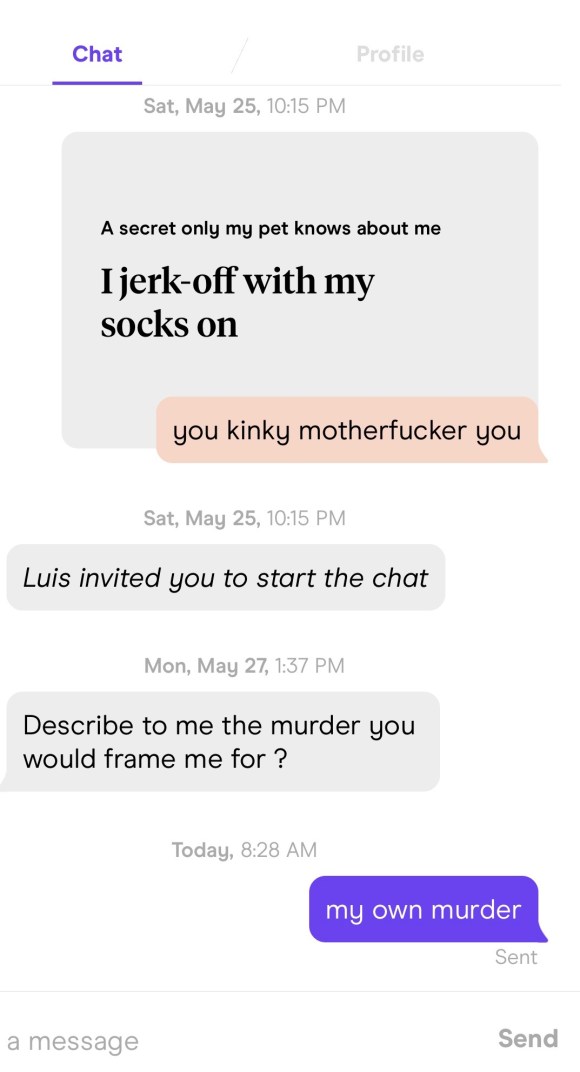
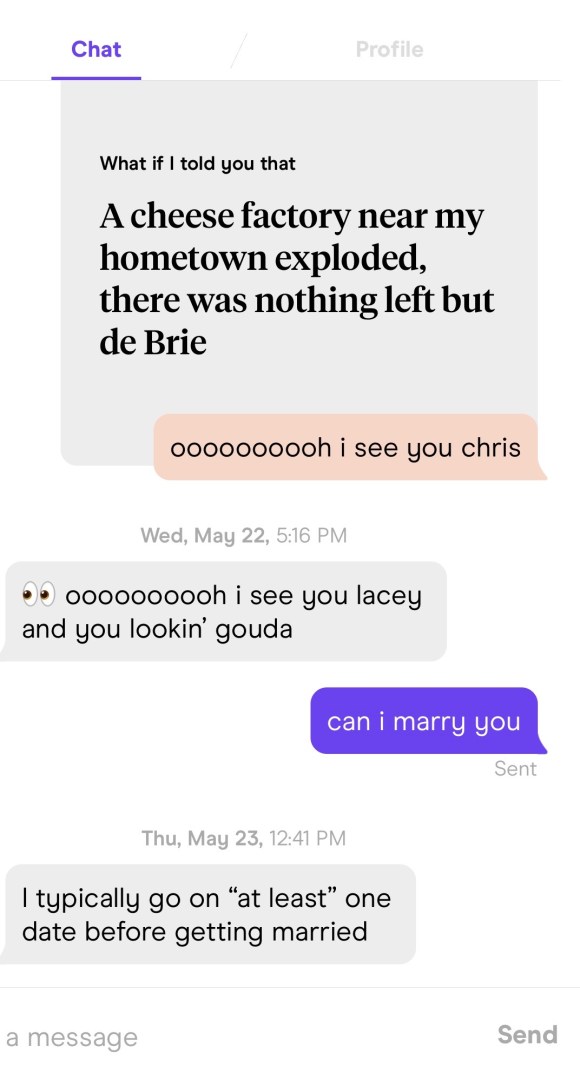
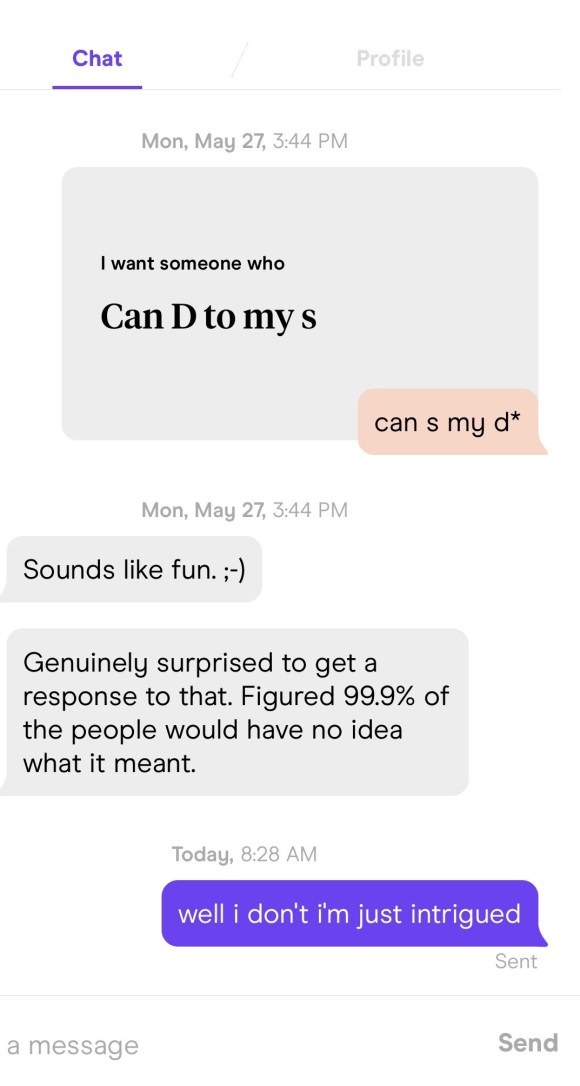
Now let’s talk pickup lines and conversation starters. The great thing about Hinge is that the prompts and pictures (mainly prompts) are jumping off points and prime opportunities for quality banter. Below is a visual montage of all of the times guys didn’t take advantage of that, and started with boring greetings that went nowhere:

IMG_5649.JPG

IMG_5652.JPGIMG_5654.JPGIMG_5655.JPGIMG_5656.JPGIMG_5670.JPG

As boring as those opening lines are, nothing, and I mean nothing, is worse than a guy that asks you for a date or for your phone number right away, with no interest in a conversation whatsoever. It is the number one way to show a girl you are not interested in getting to know her and are only interested in hooking up. Pro tip: even girls only looking to hook up on the app won’t hook up with you if you are that transparent. You have to play the game to some extent.

IMG_5664.JPG

Another pet peeve of mine is when someone only gives physical compliments. Maybe some girls would be into that, but personally it’s just shallow and phony to me. For me, those conversations wind up going in circles.

IMG_5657.JPG

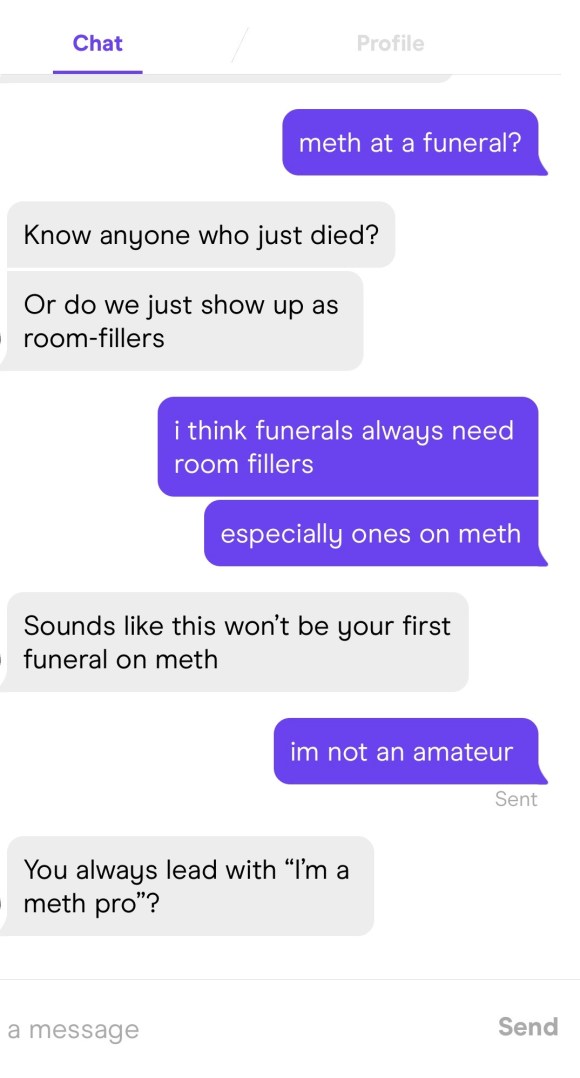
The best interactions are funny, a little weird, and the kind of conversations I would brag to my friends about if they happened with some guy I met in a bar.

IMG_5661.JPGIMG_5659.JPG

IMG_5667.JPG

The goal of Hinge is to ultimately get the girl or guy’s number and start with a texting relationship. So, here are some texting tips from me to you:

  1. Resist the temptation to shield your insecurities with laughter. A person can pick up on your confidence or lack thereof based on the authenticity of your “lol’s”
  2. Keep someone’s interest by maintaining a balance of who initiates contact. Give the person the chance to chase/pursue you, but don’t make it a one-way courtship
  3. Keep your emoji use to a minimum
  4. When deciding on when to respond to someone’s text, ensure that your timing is both genuine and discriminating. Be genuine by responding in a reasonable amount of time, but be discriminating to ensure that he/she knows you have a life
  5. This one’s primarily for the ladies: men will often make clever attempts to establish a sexting relationship with you. A firm but gracious display of your standards is necessary. If that’s what you’re down for: go for it. If it’s not your thing: make it VERY clear.
  6. Don’t let people inundate you with low-value communication attempts. If you are finding yourself on the receiving end of low-quality communication attempts, challenge them or move on.
  7. Resist the temptation to over-invest in someone you are in a texting relationship with, especially when their communication attempts appear low-interest, low-investment, and altogether unenthusiastic. There are plenty of fish in the sea (and people on Hinge).
  8. This one’s based on personal experience: never text while emotionally impaired or highly intoxicated. A single vulgar or tactless text sent while in an emotionally crippled or inebriated state can undermine WEEKS of rapport and respect a person has gained for you.
  9. Avoid over-shares and day-to-day problems with budding texting relationships. The person you’re texting doesn’t need to know every little thing you’re thinking or feeling, especially if such things are boring and mundane.
  10. Do not make a habit of accepting last minute dates by text. Consistently doing so will cause the other person to believe that you do not value your time and thus, over time, neither will they.
  11. Again, this one is coming from personal experience: prioritize phone calls or face-to-face conversations for important or serious topics. Texting is NOT a good medium for relationship-altering conversations and conflict resolutions.

I could probably write a book on this topic, but I’ll stop here. Slide into my DM’s @onceuponatimeonhinge with questions, comments, feedback, etc.!

Design a site like this with WordPress.com
Get started