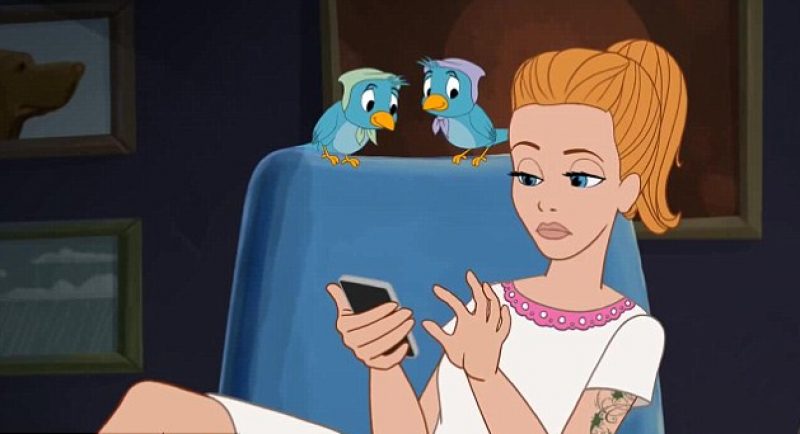
Prior to reading Poetics, the only thing I knew about Aristotle was what I learned from Professor Stromwell in Legally Blonde: she asks David Kidney if Aristotle said, “The law is reason free from passion” and then makes him swear his life on it. But yesterday as I dove into one of the Greek philosopher’s most influential works, it really began to peak my interest. Aristotle conveys many theories in Poetics, but one of the most thought-provoking philosophical claims is that any form of poetry, like a comedy or a tragedy, is fundamentally a form of imitation. Comedies and tragedies convey realistic representations of what could possibly happen when human beings act on certain motivations. It is natural for humans to derive pleasure, feel empathy, and have catharsis from engaging in poetry.
I began to think about how this theory applies to modern pop culture, particularly television. I think for adults, television is primarily either a form of entertainment, or an escape. I don’t think my mom watches Mad Men, her favorite show, looking for a way to learn some deep lesson about life, or to connect to Don Draper on an empathetic level. Maybe she connects to Betty on some level as a wife and mother (hopefully not though), and I guess the show does portray the dividing line between virtue and vice that Aristotle described in Poetics. But more or less, I think my mom watches Mad Men because it is an hour every week when she can disappear into the 1960’s and indulge in the brilliant writing and aesthetic; it is cathartic.

But then I started to think about the purpose television serves for young adults. When I was a teenager, television wasn’t just a form of entertainment for me- it was a way for me to relate to the world, and to understand that everything I was feeling and going through was normal. When I was in ninth grade I watched Rory Gilmore get a D on her first test at Chilton Academy, and it made me feel better that I got a C on my first biology test in high school. I felt empathy for Rory Gilmore, I learned life lessons from Rory Gilmore, and I don’t think I could have gotten through my teen years without Rory Gilmore.
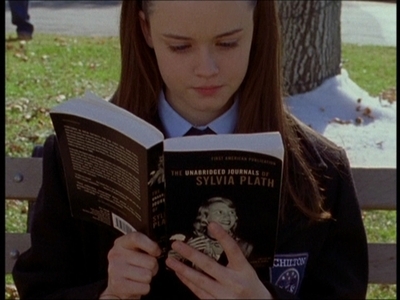
Note: I also became so obsessed with Sylvia Plath in high school to the point that my family made fun of me because I memorized her poetry.
I know that the generation before me had fantastic teen shows too- like My So-Called Life and Beverly Hills 90210. When I think about the shows teens watch today, I realize it is mostly reality TV. I guess there are shows like Glee, but I know I didn’t break out in song to get through problems in high school, and I don’t know many people that do. Not to say that important lessons can’t be learned from Glee, but I also find it discouraging that the only way a teen show can be popular this day and age is to have some sort of gimmick.

I think teens are mostly watching reality shows like Teen Mom and Rich Kids of Beverly Hills. To me, the scary part of teens watching reality television as their outlet isn’t the scandalous and outrageous nature of most of the shows. Plenty of the fictional young adult shows I watched when I was younger featured teen pregnancy and rich kids behaving badly. Plenty of the poetry Aristotle was referring to in Poetics featured human beings behaving badly. But because the characters were fictional, the writers always made a point to show how the characters progressed, got help, or learned from their mistakes. On a show like Teen Mom, you might watch one of the cast members get a DUI and then simply act defensive and make the same mistake over and over. But when Rayanne Graff OD’d on My So-Called Life, or when Marissa Cooper OD’d on The OC, you watched the characters own up to their mistakes and try to get help. Aristotle described poetry as having a clear plot: a beginning, middle, and end. Reality television is lacking because there is no rhyme or reason; there is no moral to the story.
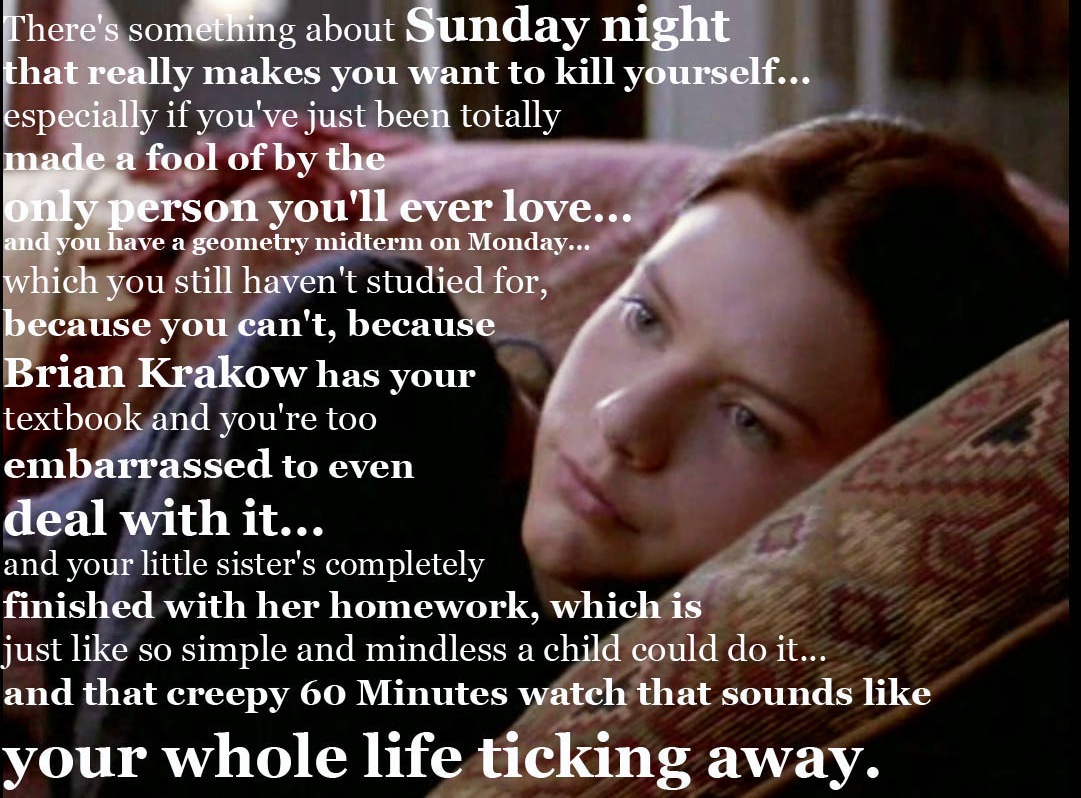
 Although this all might sound trivial, teens having a fictional role model to look to for advice, laughs, and shared experiences is so important. Before TV, young adults had characters like Holden Caulfield to empathize with through literature, but times are changing. It’s not that teens don’t want guidance, in fact they want it desperately. They just want guidance that isn’t condescending, and that is being passed down from someone they admire and trust. Sure, my parents told me that it was okay when I got a C on that first biology test because I studied and tried my best. But until I saw Rory, who felt like my friend, going through the same thing and ultimately getting over it, I didn’t get over it. In my humble opinion (to quote Angela Chase), adults need to stop shaming kids for watching too much television, and instead start thinking of ways to bring back the “television teenage heroin”. I know twenty-somethings have Girls at the moment, and thirty-somethings will always have Sex and the City (timeless), but teens need something current, because their issues are ever-changing and evolving.
Aristotle felt that poetry should use fictional representations of realistic events to elicit powerful emotions, provide catharsis, and ultimately become the equivalent of therapy. And I, Lacey Kaplan, another prominent philosopher, feel that television (particularly young adult television) can and should do the same.
*This post is primarily aimed at teenage girls because a) I have never been a teenage boy b) from what I’ve witnessed they just need video games and ESPN c) teenage boys do not read my blog.
 Once Upon a Time Dating