The first time I saw Masters of Sex was when I visited my sister in Miami last fall semester. I really wanted to watch The Real Housewives of New Jersey reunion- but hey, her apartment, her rules. The episode we watched was mid-season, so I basically had no idea what was going on and instead spent the hour pretending I was busy texting, but I was really just stalking my own Instagram account.
The following semester, I took an “Introduction to Sexuality” class and absolutely loved it. Once we started discussing Masters & Johnson’s research, I decided to give Masters of Sex another chance.
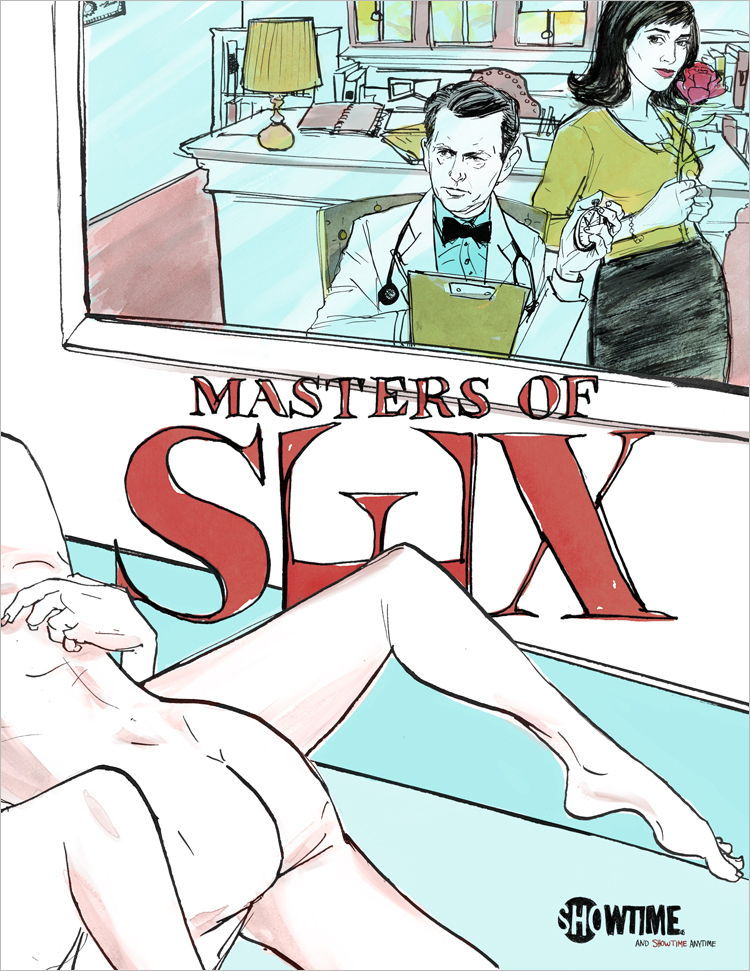
I binge watched the entire first season and instantly understood why people love it so much. It portrays Dr. William Masters (played by Michael Sheen) and his secretary/ research assistant Virginia Johnson’s (played by Janice Ian, Dyke… AKA Lizzy Caplan) study that would eventually challenge society’s concept of human sexuality and ignite the sexual revolution of the 1960’s. There are supporting characters’ entertaining story lines to add to the hour-long drama, but primarily the season focuses on Masters and Johnson’s execution of their study and how their personal/ romantic relationship flourishes as a result. Beau Bridges’ story line as Barton Scully- the Provost of Washington University and Masters’ longtime friend and mentor- is particularly heartbreaking. In the show, he harbors a long-held secret that he is gay, and the show’s portrayal of his personal struggle and his wife’s unhappiness (played by the brilliant Allison Janney) is poignant and beautifully depicted.
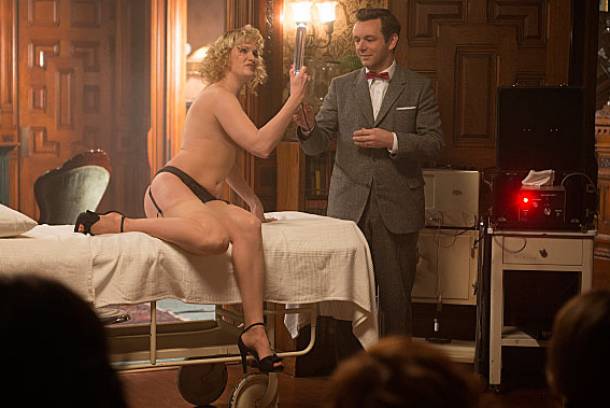
I had high expectations for the second season. Usually when the first season of a show is so fantastic, it is hard to believe that the following season won’t measure up. Unfortunately, the second season has really disappointed me so far. First of all, I have no idea where this season is even going. Season one ended with Dr. Masters being fired from Washington University because his presentation of the study was too vulgar and outrageous (I mean, he did show a video of a girl masturbating to a group of older men in the 1950’s).

Then, season two begins with Dr. Masters at another hospital, but he punches his boss in the face and is fired again. Now he is at an African-American hospital, and suddenly the show shifts from focusing on the sexual revolution to exploring segregation and civil rights. The show extends that focus to Masters’ wife, Libby’s, (played by that annoying actress who was Meryl Streep’s daughter in It’s Complicated. I don’t care enough to look up her real name) relationship with her nanny, a black girl named Coral (Keke Palmer). She forces Coral to wash her hair (even though she can only afford to get her hair done once a week) because she believes Coral gave her son, Johnny, lice. In actuality, Libby is just a hater because Coral has demonstrated to Bill that she is better with the baby than Libby is. I wonder if Coral nurses Baby Johnny and repeats, “You is kind, you is smart, you is important”. God knows that kid needs it.
Most of the supporting characters from season one are gone, except for Betty, the former prostitute who helped Masters with his study early on. Betty is now married to a rich businessman and discovers that her husband met her at a brothel years before they formally met in church, but still married her despite her sordid past… proving the story of Pretty Woman is timeless. Then her former lesbian lover, Helen, (played by Sarah Silverman- who is only on the show because she is sleeping with Michael Sheen) reappears to start dating Betty’s husband’s best friend. Talk about random. Oh, and Virginia is now selling diet pills (Regina did predict that Janice Ian was on crack).
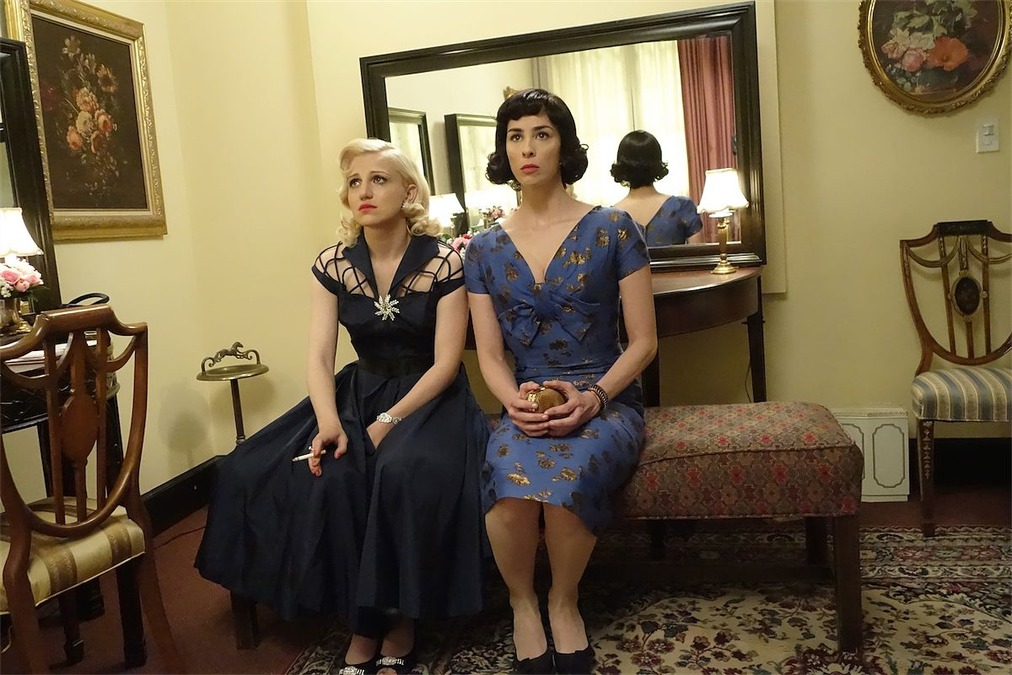
I really hope this show can pull itself together, and start appearing less scattered, because it does hold so much potential. If it stopped deviating so much from what the premise of Masters of Sex fundamentally is- a depiction of the research that triggered the sexual revolution- it would still be great. But, by the looks of it, it might be pulling a Dexter/ True Blood: fantastic in the beginning, but a parody of itself in the end.
 Once Upon a Time Dating